
CS2 Nuke Callouts
Complete guide to all 29 callout positions on Nuke. Learn every callout name to communicate effectively with your team and make faster decisions in-game.
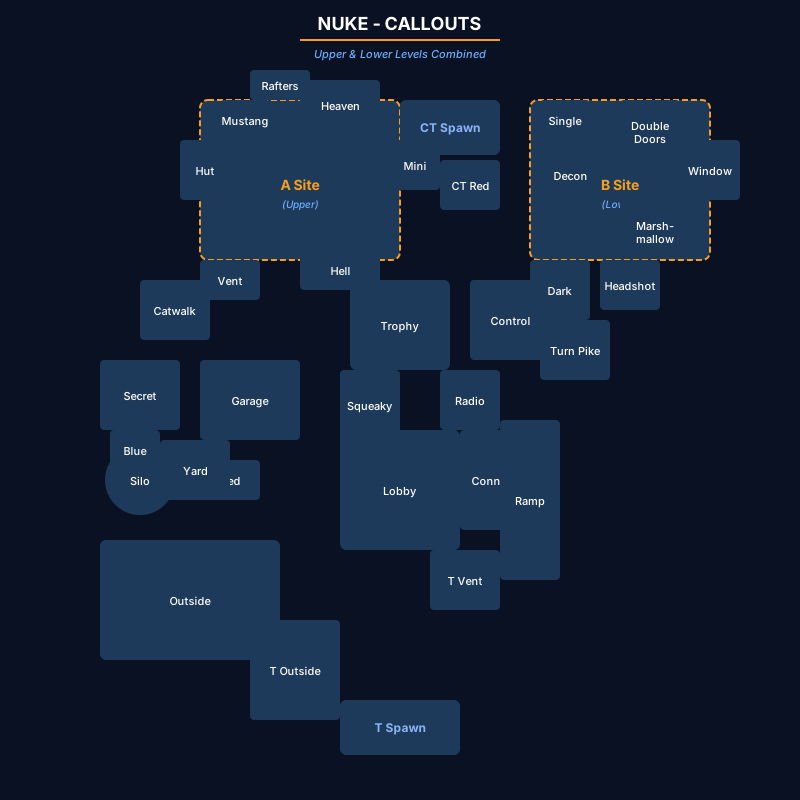
Nuke overhead map with all callout positions labeled
All Nuke Callouts (29)
Every callout position on Nuke with descriptions of where they are and how they're used in competitive play.
T Spawn
The Terrorist starting area at the bottom of the map. Provides access to Lobby, Outside, and T Roof.
T Roof
The rooftop area Ts pass through when moving toward the facility. Used for outside plays and silo attacks.
Lobby
The main interior lobby area Ts enter when pushing inside. Connects to Squeaky, Main, and Ramp.
Squeaky
The squeaky door entrance to A Site. Named for the distinctive sound it makes when opened.
Main/A Main
The main corridor leading to A Site from the T side. A primary entry route for A executes.
Hut
The small hut structure on A Site. Provides cover and is a key reference point for A Site plays.
Heaven/Catwalk
The elevated catwalk overlooking A Site. One of the strongest defensive positions on the map.
Hell
The area below Heaven on A Site. Named as the opposite of Heaven, providing a lower angle on the site.
A Site
The upper bombsite. Located on the top floor of the facility with multiple vertical angles.
Vent
The ventilation shaft connecting A Site to B Site. A unique vertical rotation path between floors.
Mini
The small room area near A Site. Used as a close-range defensive position.
Mustang
The area near A Site with a car. A defensive position providing cover on the bombsite.
Rafters
The elevated rafters area above A Site. Provides overhead angles for defenders.
CT Red
The red-colored CT area near A Site. A common defensive position for CTs anchoring A.
Garage
The garage area on the outside portion of the map. Used for outside-to-inside transitions.
Outside
The exterior area of the facility. A large open space used for outside control and silo plays.
Outside Silo
The silo structure on the outside of the map. A key landmark for outside navigation and callouts.
Secret
The hidden passage connecting outside to B Site. A flanking route that bypasses the interior.
Ramp
The ramp connecting the upper floor to the lower B Site. A critical chokepoint for B executes.
B Site
The lower bombsite beneath A Site. An enclosed space with limited entry points, making it hard to take.
Control Room
The control room area near B Site. Provides a defensive position overlooking the B bombsite.
Toxic
The toxic waste area near B Site. Named for the environmental details, used as a B Site reference point.
Dark
The dark corner area near B Site. A sneaky position for defenders to hide in the shadows.
Decon
The decontamination room between Ramp and B Site. A transitional area players pass through.
Back Vents
The vent system at the back of B Site. Connects to other areas and offers flanking opportunities.
CT Spawn
The Counter-Terrorist starting area. Located near the top of the map for quick A Site access.
Radio
The radio room near CT Spawn. A CT staging area for early-round positioning.
Yard
The yard area between CT Spawn and Outside. Used during rotations and outside plays.
Trophy
The trophy room area inside the facility. A transitional space between Lobby and the bombsites.
How to Learn Nuke Callouts
Learning callouts takes practice, but there are efficient ways to speed up the process. Here are proven methods that work for players at all skill levels:
- Play deathmatch on Nuke - Every time you get a kill or die, consciously identify the callout of that position. Say it out loud or in your head. Repetition builds muscle memory for callout association.
- Watch professional matches - Pro casters and analysts constantly use callouts during Nuke coverage. Hearing callouts in context makes them stick faster than memorizing a list.
- Use this page as a reference - Keep this guide open on your phone or second monitor while playing. When you hear a callout you don't recognize, look it up immediately.
- Call out in every match - Even in casual games, practice giving callouts when you spot enemies. "Two players B Apartments" is more useful than "they're over there." Your teammates will appreciate it and you'll learn faster.
- Walk the map in a private server - Load Nuke offline and walk through every area, identifying each callout as you move through it. This builds spatial awareness.
Tips for Effective Communication on Nuke
- Be specific - "One player site" is vague. "One player triple box on A" is actionable. The more precise your callout, the faster your team can respond.
- Include numbers - Always say how many enemies you see. "Two B apartments" tells your team exactly what to expect.
- Call when you die - Your most valuable callout is your death callout. Immediately say where the enemy who killed you is positioned.
- Some callouts vary by region - European, North American, and Asian communities sometimes use different names for the same position. This guide uses the most widely accepted English callouts.
- Keep calls short - In the heat of a round, brief callouts are better. "Jungle, two" is faster and clearer than "I see two enemies in the jungle area."
Nuke Utility Lineups
Now that you know the callouts, learn the utility lineups for Nuke.
Frequently Asked Questions
How many callouts are there on Nuke?
What are the most important Nuke callouts to learn first?
Are Nuke callouts the same in CS2 and CS:GO?
Do professional players use the same Nuke callouts?
How can I practice Nuke callouts quickly?
Practice callouts with our community
Join practice sessions where you can learn callouts in real matches with other competitive players.